

Author: Jenn Redd
In August 2025, Fortune ran a piece lamenting housing “shrinkflation” – the idea that Americans were getting ripped off because new homes were getting smaller and more expensive per square foot. The framing was clear: less house for more money is a problem. Americans deserve more.
Six months later, Fortune published this…
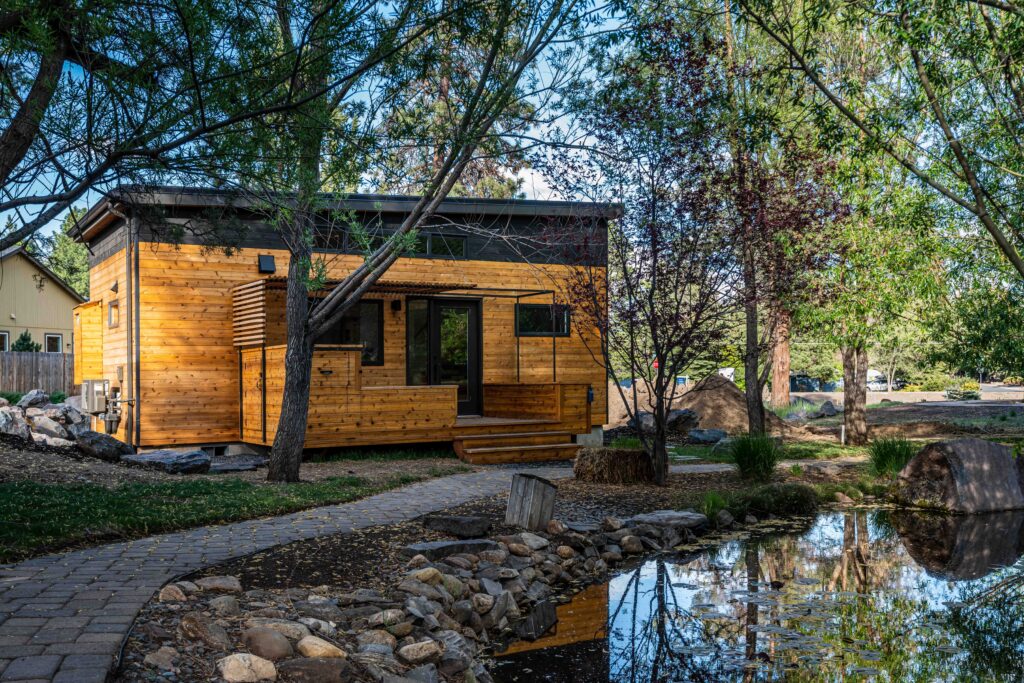
They profiled Denise Martin, a 65-year-old retired financial advisor and grandmother of three, living in a small “granny pod” in her daughter’s backyard in Bend, Oregon. Her son-in-law built it. The family loves it. And Fortune – the same publication that told Americans getting less house for more money was a massive problem – is now celebrating a 400-square-foot backyard cottage as an American “economic necessity.”
They didn’t connect the dots between those two stories. But they should. Because together, they tell something far more interesting than either one does alone.
I wrote a reaction to the shrinkflation piece at the time – arguing that smaller homes weren’t a symptom of a broken market but a market finally catching up to what millions of buyers actually want and need. Multigenerational options. ADUs. Right-sized living as progress, not compromise. This latest feature says everything my reaction was trying to say – just with a grandmother and a backyard cottage instead of charts and data.
The Story Fortune Told Without Realizing It
Here’s the arc worth noticing. In August 2025, Fortune was fretting over homes getting smaller and more expensive per square foot. By February 2026, they’re celebrating a grandmother thriving in 400 square feet – even quoting the President of Coldwell Banker Affiliates saying small scale, multigenerational living is on the rise because of affordability issues and economic uncertainty, mortgage interest rates, and a shortage of housing inventory.
So what changed between August and February? Nothing significant about the housing market. What changed is that the human story caught up to the data.
When you frame smaller homes as an abstract statistic – price per square foot, median home size trends, cost comparisons that ignore context – it’s easy to spin it as loss. When you show a grandmother watching her granddaughter take her first steps from a 400-square-foot home she loves, it becomes something else entirely. It becomes a solution.
Denise Martin is not a cautionary tale. She’s an empty nester who right-sized intentionally, stayed close to her family, reduced her costs, and found that 400 square feet works better for her life than whatever she left behind. She is, to the letter, the demographic the small-scale housing market has been building for.
Less house, done right, isn’t less. It’s exactly enough.
It’s a framing the small-scale housing market has understood for years. Glad Fortune has joined this side of the conversation.
Why ADUs Are Taking Center Stage
Let’s talk about what’s really happening here, because it matters for anyone thinking about buying a home, investing in real estate, or evaluating a property’s long-term potential.
The “granny pod” – or as I’ll refer to it, an Accessory Dwelling Unit or ADU, but also granny flat, casita, backyard cottage, in-law suite, or tiny home – has been one of the most undervalued tools in residential real estate for the better part of a decade. Savvy buyers and investors have known this. Zoning reform advocates have fought for this. Mainstream financial media is finally catching up.
And here’s what makes this more than a multigenerational housing story. The same forces driving Denise Martin into her backyard cottage – the need for flexibility, the desire to right-size while staying close to family, the financial logic of doing more with less – are reshaping how buyers and sellers think about real estate across every demographic. Not just grandmothers. Not just multigenerational families. Everyone.
As more buyers and sellers enter this conversation, one distinction is worth making clearly: a permitted ADU and an unpermitted backyard structure/guest house/tiny home etc – are not the same thing in real estate terms. Both can deliver real lifestyle value, as Fortune highlights. But the financial upside – the appreciation data, the clean story at resale, the rental income potential – largely lives with a permitted structure. If you’re evaluating a property to purchase, thinking about adding an ADU, or considering how to position your home to sell, that distinction matters more than most people realize. If you want to talk through the pros and drawbacks, Reach out or call me and let’s talk through it.
Jason Waugh, President of Coldwell Banker Affiliates, identified three drivers behind the rise of multigenerational living in the February Fortune piece: economic necessity, convenience, and care. Those drivers extend well beyond multigenerational households. They’re the same forces reshaping how any buyer – at any life stage, for any reason – thinks about what a property should actually do for them.
Buyers aren’t just shopping for square footage… They’re shopping for an infrastructure that supports their lifestyle – a life, not just a listing.
What the Data Actually Shows
The numbers behind this shift aren’t new – if you want to go deeper, my reaction to the August shrinkflation piece covers the full picture. But here’s what matters most right now…
There is a real and persistent gap between the smaller homes buyers want and the smaller homes the market is building. ADUs and cottages are some of the most practical ways to close that gap – not by building new greenfield subdivisions but by unlocking the infill potential that already exists in properties across Bend right now.
And here’s where it gets more interesting: 2025 data from the FHFA shows that properties with an ADU don’t just offer more utility – they appreciate faster than those without. Bend now allows up to two ADUs on a single residential lot, meaning the right property in Bend isn’t just a home, it’s a platform. It can generate rental income. It can house a family member who would otherwise be paying $3,500 to $9,000 a month for assisted living. It can adapt to your life as it changes in ways a conventional single-family home simply can’t.
What This Means If You’re Buying or Selling Right Now
If you’re a buyer, here’s the question I want you to ask about every property you tour: does this lot have ADU potential? And even if you’re not ready to build or add one today – what could change in your life in the next few years that might make it not just viable but necessary? A parent who needs to be closer. A child who can’t yet afford to live independently. A rental income stream that changes what you can qualify for. The optionality of ADU potential has real financial value at resale, and it’s not always priced into the listing.
That hidden upside is your opportunity – whether you use it or not.
If you’re a seller, this is exactly the moment to make sure your listing narrative speaks to ADU potential – explicitly. The buyer pool for a property with an existing ADU or a lot that can accommodate one can be meaningfully larger than the pool for a conventional single-family home in 2026. ADUs are no longer a quirky alternative housing choice. They’re front-page news. And working with an agent who understands the zoning and preliminary due diligence around what’s possible on your property – before it hits the market – can be the difference between a good sale and a great one.
Bend, Oregon – Where This Shift Is Already Happening
The Fortune granny pod story didn’t happen in California or New York. It happened right here in Bend, Oregon. That’s not a coincidence. Bend has been at the forefront of small-scale housing innovation – from ADU-friendly zoning to a growing ecosystem of small home builders and developers who are building for the full spectrum of how Americans live today, not just the nuclear family that wants a 3/2 on half an acre with a white picket fence.
This is the market I’ve been working in and advocating for. In a city as desirable as Bend – constrained by an urban growth boundary that limits sprawl and protects what makes it special – infill, right-sized living, and ADUs were never a trend. They were an inevitability.
The Right-Sizing Revolution Is Accelerating
This isn’t shrinkflation. It isn’t compromise. It’s right-sizing. And it’s happening across every demographic – not just grandmothers in granny pods.
It’s the young professional who wants to own without the overhead of a 2,400-square-foot house. It’s the empty nester who wants to downsize without sacrificing ownership. It’s the multigenerational family figuring out that a 400-square-foot structure in the backyard solves three problems at once: housing costs, childcare, and connection. It’s the dual-income couple who’d rather have an 800-square-foot home and two season passes to Bachelor – with money left over for new gear – than a 1,500-square-foot house that keeps them inside cleaning on weekends instead of on the mountain.
Whether you arrive here by choice or by circumstance, the result tends to be the same – it works.
This is the core belief behind Selling Small – that right-sized living isn’t a consolation prize, it’s a competitive advantage. Every small-scale home, every property with ADU or infill potential, every ‘I just want to live by my friends’ compound living dream I help clients buy, sell or create is a bet on the future of American real estate. One that looks a lot less like a McMansion to compete with your neighbors and a lot more like intentional living in a space that’s right-sized for you.
Fortune said so twice. They just didn’t realize it.
Are you looking for a property with ADU potential, a small-scale home that punches above its square footage, or guidance on what to look for in today’s market? If that’s the kind of real estate you’re looking for, I’d love to be your guide.
Jenn Redd is a Bend-based real estate agent, Certified ADU Specialist, and the voice behind Selling Small – a growing community for buyers, sellers, and investors who believe right-sized living is a strategy, not a compromise. She represents Hiatus Homes as their exclusive sales agent and specializes in small-scale homes, cottage communities, and properties with ADU and infill potential across Bend, Oregon.
Frequently Asked Questions: Small Scale Homes and Properties with ADU Potential in Bend, Oregon
What is a property with ADU potential in Bend, Oregon?
A property with ADU potential is a home on a lot that has the space, zoning, and physical conditions to support adding an Accessory Dwelling Unit. In Bend, Oregon, zoning reform has made ADU potential far more common than most buyers realize. An ADU can often be synonymous with other terms – granny pod, granny flat, casita, backyard cottage, in-law suite, or tiny home – defined as a fully self-contained secondary structure on the same lot as the primary residence.
How many ADUs can you build on a residential lot in Bend, Oregon?
As of 2026, City of Bend Development Code now allows up to two ADUs on a single residential lot. Specific regulations around lot size, setbacks, and height vary, so working with a local ADU specialist is recommended.
Do properties with an ADU in Bend, Oregon appreciate faster?
Yes. National data from the Federal Housing Finance Agency (FHFA) shows that properties with an ADU appreciate faster than comparable properties without one. ADU potential is also increasingly a factor in buyer decisions in Bend, which expands the pool of potential buyers for any property that has or can accommodate one.
What is the difference between a granny pod and an ADU?
A granny pod is a type of ADU. ADU – Accessory Dwelling Unit – is the official zoning and real estate term for any secondary dwelling on a single residential lot. Granny pod, granny flat, casita, in-law suite, and backyard cottage are all informal names for the same concept: a fully functional smaller home on the same property as a primary residence.
How much does it cost to build an ADU in Bend, Oregon?
Costs vary depending on size, materials, and whether the unit is prefabricated, modular, or stick-built or custom. Small prefabricated units under 400 square feet can start around $100,000 – $160,000 installed. Custom builds typically run higher. With Bend now allowing two ADUs per lot, the income and lifestyle return on that investment can be significant for the right property.
What is multigenerational living and why are properties with ADUs supporting it?
Multigenerational living means two or more generations of a family living on the same property – often in separate structures. It’s growing in the U.S. due to housing affordability challenges, rising childcare costs, and the desire for families to stay close while maintaining independence. Properties with an ADU make multigenerational living practical without sacrificing privacy or autonomy.
Related Reading: