

If you’ve been thinking about buying a smaller home in Bend but waiting for rates to drop first, you’re not alone. That’s the conversation happening at a lot of kitchen tables right now. But there’s a piece of the rate conversation that almost nobody is having – and it might actually change how you think about this decision.
This isn’t a “rates will come down soon, just wait” post. It’s a real look at what lower purchase prices do to your financial picture, even when rates stay elevated.
The Rate Obsession Is Missing Half the Picture
Most buyers are focused on the interest rate. That makes sense – it’s the number that’s plastered everywhere and it feels like the thing you can’t control. But the rate only tells part of the story. The other number – the one that actually determines what you pay every month – is the loan amount.
And that one, you do have some control over.
When you buy a smaller home at a lower purchase price, you’re borrowing less. That means less exposure to the rate. Above-6% financing on a $450,000 loan looks very different than above-6% financing on a $750,000 loan. The gap in monthly payments isn’t a rounding error – it’s hundreds of dollars a month, every single month, for the life of the loan.
The Full Cost of Owning a Home Is Bigger Than the Mortgage
Here’s where the case for buying smaller gets even more interesting. Most buyers compare purchase prices – or monthly payments – and stop there. But the mortgage is just one line item.
The full cost of owning a home includes:
- Property taxes – assessed on value, so a lower-priced home means a lower annual tax bill
- Homeowner’s insurance – premiums are tied to replacement cost, which scales with size
- Utilities – a smaller, well-designed home costs less to heat and cool
- Maintenance – roof, HVAC, exterior, landscaping – all of it scales with square footage
- HOA fees – if applicable, though many small-home communities keep these low by design
Stack all of that together and the monthly cost difference between a right-sized home and a larger resale in Bend isn’t just the mortgage payment. It’s a meaningful gap in what you’re spending to live there every month.
What the Math Actually Looks Like in Bend
The median home price in Bend is currently sitting in the $725,000 to $750,000 range, depending on the source and time of year. A well-designed, intentionally built smaller home – new construction, quality finishes, smart layout – can often be found in the $450,000 to $550,000 range. That’s a purchase price difference of $200,000 to $300,000.
At rates above 6%, a $250,000 difference in loan amount translates to roughly $1,200 to $1,500 more per month in mortgage payment alone – before taxes, insurance, or utilities. Over five years, that gap is somewhere between $72,000 and $90,000.
That’s not a small number. That’s a retirement contribution. That’s a travel fund. That’s the financial margin most buyers say they want but can’t find at the higher price point.
The smaller home isn’t the consolation prize. In this market, it might be the sharper financial move.
Small Doesn’t Mean Compromise Anymore
There’s still a perception that buying smaller means settling – for a dated layout, a cramped floor plan, or a location that doesn’t excite you. That was true of a certain era of small home construction. It’s not the reality of how intentional small homes are being designed and built today.
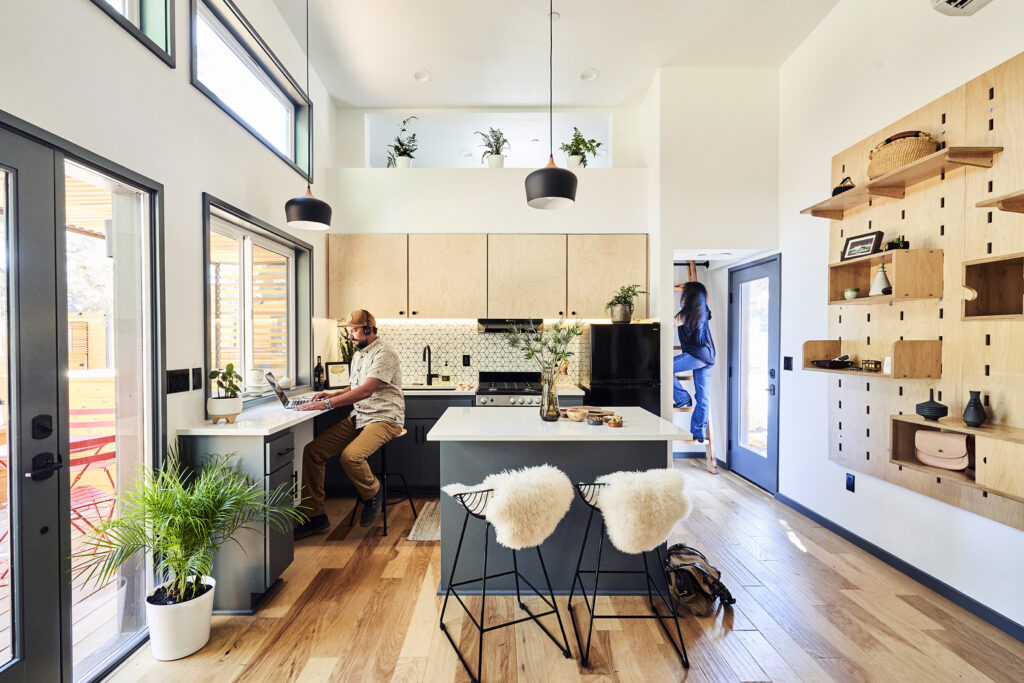
The new generation of right-sized homes – efficient layouts, high-quality finishes, smart storage, and real outdoor connection – is a completely different product than the starter homes of the 1980s and 90s. Developers building in this space are competing on design and livability, not just price point. The result is homes that feel larger than their footprint and live better than homes twice their size.
Location matters more than square footage for many buyers. A smaller home in a connected neighborhood – near trails, restaurants, and the things you actually use – will almost always outperform a larger home in a more isolated location, both for daily quality of life and long-term value.
The Buyers Who Are Making This Work Right Now
The buyers choosing smaller aren’t all stretching to get into the market. Some of the most financially clear-eyed buyers in Central Oregon right now are people who simply did the math.
They’ve run the numbers on total monthly cost – not just the mortgage – and decided they’d rather have a home that fits the life they’re actually living than a larger footprint that eats into everything else. They’re trading square footage they wouldn’t use for a location they love, a lower monthly obligation, and more freedom to do the other things that matter to them.
That’s not a compromise. That’s a choice.
The Right Question Isn’t “When Will Rates Drop?”
It’s: what does this purchase actually cost me – every month, over time – and what does it free up for everything else?
If you’re exploring right-sized homes in Central Oregon, I’d love to help you run those real numbers. The math is usually more interesting than people expect.
Frequently Asked Questions
Is it worth buying a home in Bend when rates are above 6%? It depends on your total monthly picture, not just the rate. At current rates, a lower purchase price can offset a significant portion of the rate impact – sometimes by $1,000 or more per month. The buyers finding the most traction right now are the ones focused on loan amount, not just rate.
What is the median home price in Bend, Oregon? The median home price in Bend is currently in the $725,000 to $750,000 range. That figure covers a wide range of home sizes and conditions – which is part of why right-sized new construction in the $450,000 to $550,000 range is drawing serious attention from buyers doing the math on total monthly cost.
What are the benefits of buying a smaller home in Central Oregon? Lower purchase price means a smaller loan, lower monthly payment, and less rate exposure. Beyond the mortgage, smaller homes typically carry lower property taxes, insurance premiums, utility bills, and maintenance costs. In a market like Bend – where location and lifestyle drive a lot of value – a well-designed smaller home in the right neighborhood often outperforms a larger home on the margins that matter most.
Jenn Redd is a real estate and intentional living strategist at Varsity Real Estate in Bend, Oregon, and the exclusive sales agent for Hiatus Homes.